

Early spring brings a welcome return of green to the lawn, but not every fresh shoot belongs there. Among the most deceptive early arrivers is a low-lying ground cover with delicate, scalloped leaves and small, charming purple blossoms. When crushed underfoot or clipped by a lawnmower blade, it releases a sharp, unmistakably minty fragrance.
Homeowners often dismiss this plant as a harmless, slightly aromatic ground cover. By midsummer, however, that modest patch transforms into a suffocating carpet.
Known botanically as Glechoma hederacea and colloquially as ground ivy or Creeping Charlie, this aggressive perennial weed is one of the most stubborn adversaries a home lawn can face. Left unchecked, it weaves a dense subterranean and surface web that robs turfgrass of light, moisture, and root space. Eradicating it requires understanding its biology, avoiding common DIY traps, and striking at the precise seasonal window when the plant is most vulnerable.
Anatomy of an Aggressive Invader
Creeping Charlie belongs to the mint family, and it possesses all the stubborn survival traits that make that botanical group both resilient and maddening. The weed spreads through an extensive system of stolons—horizontal above-ground stems, commonly called runners, that creep along the soil surface beneath the lawn canopy.
What makes ground ivy uniquely difficult to control is its rooting behavior. At virtually every joint or leaf node along these runners, the plant sends down fibrous roots that anchor deep into the soil. As these nodes take root, they branch outward in multiple directions, weaving an intricate, living lattice that sits directly atop your turf.
Turfgrass requires abundant sunlight at its crown to sustain photosynthesis and develop strong tillers. Creeping Charlie exploits this requirement by creating a broad-leaf canopy that blankets the grass blades. Starved of direct sun and crowded out at the soil level, the underlying grass turns yellow, thins out, and dies within a single growing season.
Because ground ivy tolerates everything from damp, deep shade to baking midday sun, it easily crosses the boundary from garden beds into pristine turf, establishing a foothold that conventional mowing cannot stop.
Why Standard Weed Control Methods Fail
Most homeowners tackle lawn weeds using methods designed for upright invaders like dandelions, plantains, or crabgrass. When applied to Creeping Charlie, these standard remedies almost always fail, frequently making the infestation worse.
The Hand-Pulling Trap
Hand-weeding is a natural first instinct, but with Creeping Charlie, manual pulling is a fool’s errand. Because the plant anchors itself at every single stem node, pulling on a runner generates tension that snaps the thin stem between rooting points.
Every fragment of stem left behind in the soil contains latent bud tissue. Within days, those orphaned pieces push out new leaves and establish independent root systems. Unless the soil is saturated to mud and you painstakingly unearth every millimeter of runner—a near impossibility across a large lawn—hand-pulling simply prunes the weed and encourages bushier, denser regrowth.
The Waxy Cuticle Defense
Even conventional liquid weed killers often slide right off ground ivy without causing substantial harm. The leaves of Glechoma hederacea are coated in a thick, waxy cuticle designed to minimize moisture loss.
When you spray a standard, water-based weed control mix onto the plant, the droplets form tight beads on the glossy leaf surface and roll harmlessly off onto the soil. Without adequate contact and penetration time, the active chemical never enters the plant’s vascular tissue.
The Ineffectiveness of Basic Three-Way Herbicides
The typical big-box store weed killer is a three-way blend containing 2,4-D, dicamba, and mecoprop (MCPP). While this combination readily kills dandelions and clover, Creeping Charlie exhibits high natural tolerance to standard rates of 2,4-D.
A standard application might burn the upper leaves and cause temporary curling, giving the homeowner a false sense of victory. However, because the chemical fails to translocate deeply into the interconnected root network, the weed rallies within a month, producing fresh runners from its uninjured crowns.
The Danger of the Borax Myth
A pervasive piece of internet garden lore suggests spraying a solution of household borax to kill Creeping Charlie without harming grass. The logic rests on the fact that plants require trace amounts of boron, but ground ivy is exceptionally sensitive to boron toxicity compared to turfgrass.
In practice, the margin between a dose that harms the weed and one that permanently damages the soil is razor-thin. Boron does not break down in the earth; it is a heavy mineral element that accumulates over time.
Miscalculating the concentration by a fraction of an ounce can easily sterilize your lawn soil, rendering the area incapable of growing turfgrass, shrubs, or perennials for years. Relying on kitchen chemistry for aggressive weeds carries far more risk than reward.
The Science of Eradication Timing
Defeating Creeping Charlie requires working with the plant’s internal vascular system rather than fighting against it. Systemic herbicides function by entering the sap stream and traveling to the roots to destroy the plant from the inside out. The direction of that sap stream changes dramatically depending on the season.
In early spring, when homeowners first notice purple flowers and rush to spray, the plant is directing all of its energy upward and outward. Carbohydrates flow from the root system into new leaf development and flower production.
Spraying systemic herbicides during early spring fights this outward tide. The plant absorbs only a fraction of the chemical into its roots, resulting in top-growth burn but leaving the foundational root system primed for recovery.
The Autumn Window: Strike When the Sap Flows Down
The single most effective time to eliminate Creeping Charlie is in early to mid-autumn, typically between the first light frost and the onset of sustained freezing temperatures.
As autumn temperatures drop and days grow shorter, Creeping Charlie shifts its metabolic focus toward winter survival. It halts leaf production and begins shuttling massive quantities of carbohydrates from its leaves downward into the root system and stolon crowns to build food reserves for the winter ahead.
When you apply a systemic herbicide during this active downward flow, the plant actively pulls the chemical deep into its root system. The herbicide circulates through every runner and subterranean node, killing the plant at the root level and ensuring it cannot emerge the following spring.
A secondary, acceptable window occurs in late spring, specifically during the peak bloom phase. At full bloom, the plant has exhausted its winter root reserves to produce flowers and has not yet rebuilt its energy stores, leaving it in a temporarily weakened metabolic state. However, the autumn application remains twice as effective.
Choosing the Right Chemical Weapon
To permanently clear ground ivy from turfgrass, you must use an herbicide formulated to tackle woody, tough-to-control perennials without killing the lawn.
Triclopyr: The Broadleaf Specialist
The proven active ingredient for eliminating Creeping Charlie in cool-season lawns is triclopyr.
Triclopyr acts as a synthetic auxin, a plant hormone mimic that induces uncontrolled, destructive cell division in broadleaf weeds while leaving true turfgrasses, such as Kentucky bluegrass, fescue, and perennial ryegrass, unharmed. It penetrates creeping ground covers far more effectively than standard 2,4-D formulations.
Look for concentrated herbicides that list triclopyr as the primary active ingredient, often labeled for tough brush, clover, or wild violet control. Products formulated as triclopyr ester generally penetrate waxy leaf surfaces better than amine formulations, but ester products can volatilize into vapor if applied when ambient temperatures exceed 80 degrees Fahrenheit, risking damage to nearby ornamental shrubs and garden flowers. For early autumn applications, cooler temperatures make ester formulations particularly effective.
The Essential Addition of a Surfactant
To bypass the waxy defense mechanism of Creeping Charlie’s foliage, never apply herbicide without a non-ionic surfactant.
A surfactant is an additive that breaks the surface tension of the liquid spray. Instead of beading up into rolling droplets, the spray flattens into a continuous, thin film across the leaf surface. This prolonged contact allows the triclopyr to dissolve the outer waxy layer and enter the plant’s cellular tissue. Many commercial formulations come pre-mixed with surfactants, but adding a dedicated agricultural surfactant to a concentrated mix guarantees proper adhesion.
The Two-Pass Strategy
Creeping Charlie is an interconnected colony, and a single herbicide application rarely destroys one hundred percent of an established infestation.
Plan for a two-pass application program. Apply your first treatment in early autumn when temperatures settle into the 60s during the day. Inspect the lawn ten to fourteen days later. While the primary mats will show severe twisting, discoloration, and stem collapse, you will often find small, resilient patches of green runners that avoided full absorption.
Apply a targeted spot-spray to these lingering patches fourteen to twenty-one days after the initial application. This second treatment delivers the decisive blow before the plant enters winter dormancy.
Cultural Corrections: Starving the Weed of Advantage
Herbicides clear the immediate infestation, but they do not alter the underlying conditions that allowed Creeping Charlie to thrive in the first place. Ground ivy is an opportunistic plant that colonizes thin, struggling turf. If you eliminate the weed but leave bare soil and weak grass, dormant seeds in the soil bank will quickly reclaim the space.
Eliminate Excessive Shade and Moisture
Creeping Charlie dominates in environments where turfgrass struggles to survive: damp, low-light pockets beneath dense tree canopies and along north-facing foundations.
Prune low-hanging tree branches and thin interior canopies to allow morning sunlight to filter down to the ground. Sunlight is the best natural defense against ground ivy, as turfgrass flourishes in bright light while the weed loses its competitive edge.
Simultaneously, evaluate your irrigation habits. Creeping Charlie has a relatively shallow root system that thrives on frequent, light watering that keeps the top inch of soil perpetually moist. Shift your lawn irrigation to deep, infrequent watering cycles—roughly one inch of water applied once a week. This allows the surface soil to dry out, stressing shallow weed roots while forcing turfgrass roots to reach deep into the subsoil.
Relieve Soil Compaction
Heavy, compacted soil restricts oxygen exchange to grass roots, creating thin spots in the lawn canopy that invite weeds. Perform core aeration in the early autumn prior to or shortly after tackling broadleaf weeds. Pulling soil plugs opens channels for air, water, and nutrients to reach the turf root zone, encouraging vigorous turf density that physically resists weed encroachment.
Raise the Mower Deck
Close-cropped lawns are an open invitation for low-growing weeds. Creeping Charlie naturally stays low to the ground, easily sliding underneath a two-inch mower cut while the grass blades above it are severely stressed.
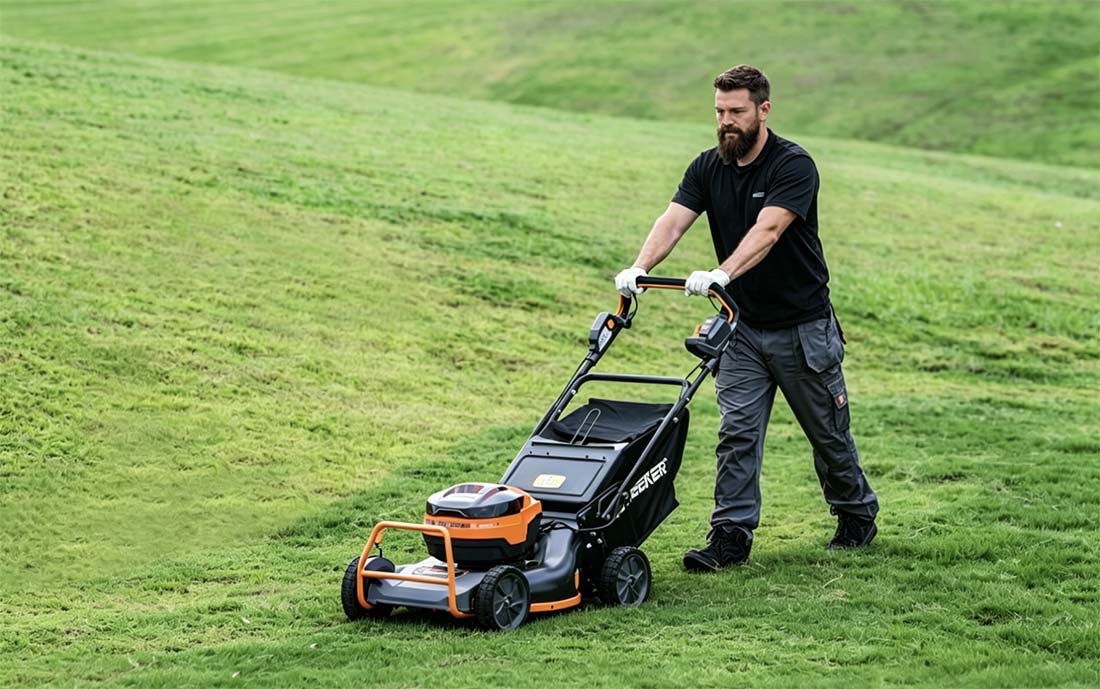
Raise your mower blade to a minimum of three and a half to four inches. Taller grass blades cast deep shadows across the soil surface, cooling the ground and blocking the sunlight that ground ivy runners require to photosynthesize and generate new rooting nodes.
Rebuilding the Lawn After Treatment
Once the weed dies back, you will likely be left with patchy, bare sections of soil where the dense mats previously smothered the lawn. These empty areas must be populated immediately with desirable turf before winter sets in or before annual weeds emerge the following spring.
Keep in mind that broadleaf herbicides like triclopyr possess a soil residual window. Sowing grass seed immediately after spraying will prevent new seed germination. Check the herbicide manufacturer guidelines, which typically dictate waiting three to four weeks after application before overseeding.
When reseeding shade-prone areas where Creeping Charlie was dominant, select grass cultivars specifically engineered for low-light survival. Standard Kentucky bluegrass will quickly thin out in heavy shade, reopening the door for ground ivy.
Instead, blend in fine fescues—such as creeping red fescue, hard fescue, and chewings fescue—or modern shade-tolerant varieties of turf-type tall fescue. These varieties maintain thick, dense cover in partial shade, establishing a tight botanical barrier that ground ivy cannot easily penetrate.
Establishing Property Borders
Even after clearing your yard, neighboring properties may remain heavily infested. Because Creeping Charlie spreads laterally through creeping runners, it will readily cross property lines, fence boundaries, and landscape edging.
Install a physical boundary between infested zones and your managed turf. A clean landscape trench four inches deep, or a physical paver or vinyl barrier set into the soil, prevents surface stolons from sneaking across the line unnoticed. Inspect this border several times a season, using a weed trimmer or dedicated spot-spray along the perimeter to sever any advancing runners before they set roots in your turf.
Reclaiming a lawn from Creeping Charlie requires patience and persistence. By abandoning futile pulling, selecting an herbicide capable of penetrating its defenses, and applying your treatment during the metabolic transition of early autumn, you can eradicate this stubborn invader and restore a thick, resilient lawn.