

Discovering a cloud of tiny flying insects hovering near your kitchen sink or bathroom vanity is one of the most frustrating domestic nuisances a homeowner can face. The immediate reaction is usually a hurried swipe of the hand, a blast of aerosol spray, or an impromptu bowl of vinegar set on the counter. Yet days later, the pests remain, multiplying in corners and flitting past your face while you cook or brush your teeth.
The reason these infestations drag on is almost always a case of mistaken identity. While people tend to lump all small, bothersome insects under the catch-all label of “gnats,” fruit flies and drain flies are biologically distinct organisms with entirely different food sources, breeding environments, and vulnerabilities. An approach designed to wipe out fruit flies will do virtually nothing to stop drain flies, and pouring common household chemicals down a sink will not fix a hidden fruit fly nursery. Eliminating the problem for good requires recognizing what species you are dealing with and dismantling the exact conditions that allow it to thrive.
Morphological Differences: Physical Appearance and Anatomy
At first glance, both pests look like indistinguishable specks of airborne lint. However, a closer look under good lighting reveals stark physical differences that make identification straightforward.
Fruit Flies (Drosophila melanogaster)
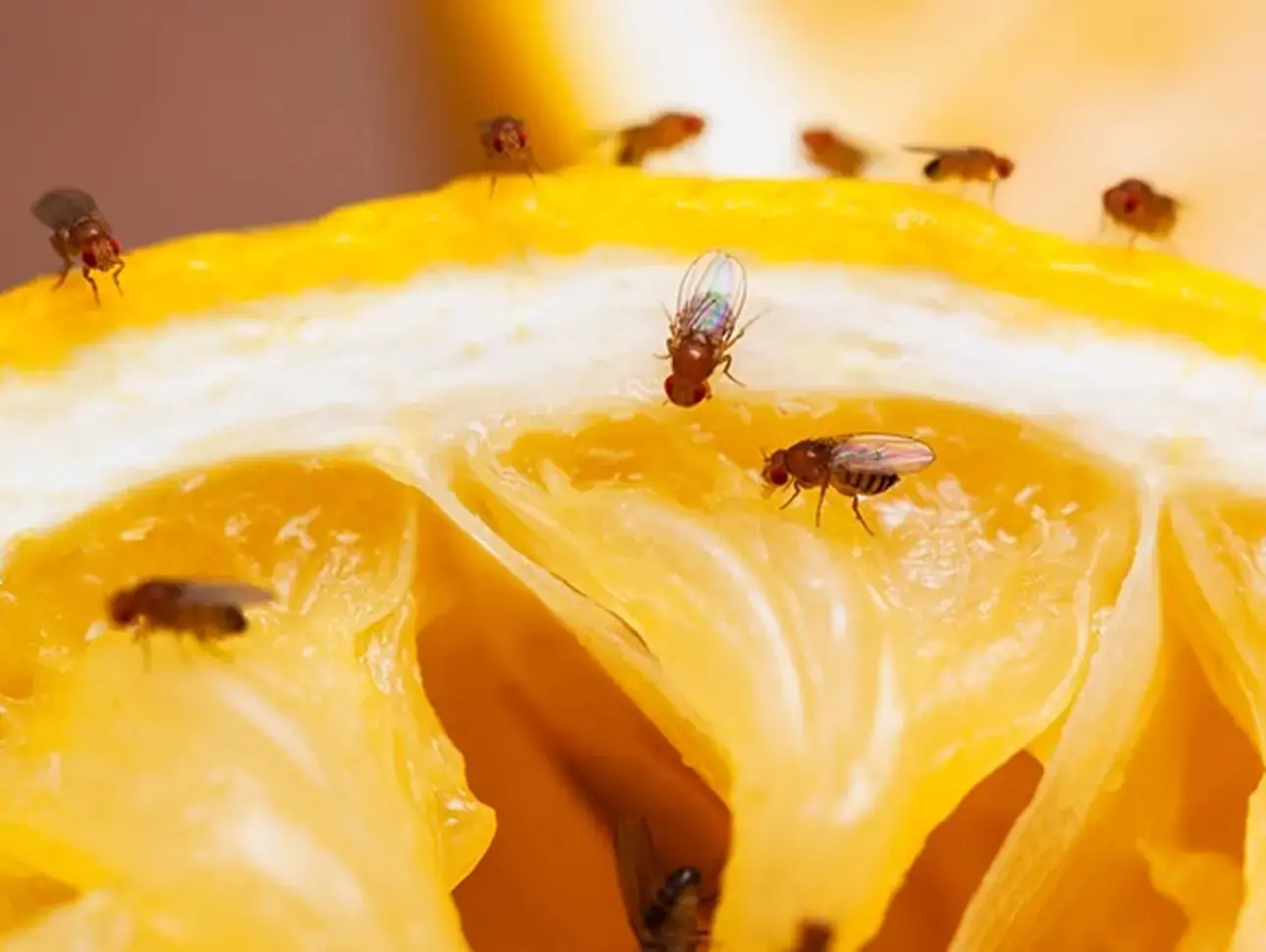
Fruit flies look like miniature, streamlined versions of standard houseflies. Measuring roughly one-eighth of an inch long, their bodies are slender, tapered, and typically tan, yellow-brown, or amber.
The most dependable visual marker is their eye color. The vast majority of common fruit flies feature prominent, bulbous red eyes, though darker-eyed variants exist. Their bodies are smooth rather than fuzzy, and their translucent wings fold flat against the top of their abdomen when they land, giving them a sleek, elongated profile.
Drain Flies (Family Psychodidae)
Drain flies—often called moth flies, sewer gnats, or filter flies—possess an entirely different silhouette. They are slightly smaller to comparable in size, ranging from one-sixteenth to one-fifth of an inch, but they appear wider and bulkier due to a dense covering of hair.
Unlike the sleek fruit fly, a drain fly looks remarkably like a microscopic moth. Its body is dark gray or charcoal black, and its broad, paddle-shaped wings are fringed with velvety hairs. When a drain fly lands, it does not fold its wings flat; instead, it holds them angled slightly upward and outward in a distinctive roof-like canopy over its back. Drain flies have dark, non-prominent eyes and short, feathery antennae that contribute to their fuzzy, rounded appearance.
Flight Patterns and Daily Behavior
If you cannot get close enough to examine wing shape or eye color, observing how the insect moves through the air provides an immediate diagnosis.
Fruit flies are agile, capable fliers. They hover effortlessly, pivot sharply, and react quickly when you try to swat them. They are drawn toward ambient warmth, light, and the scent plumes of fermenting carbohydrates. When disturbed, a fruit fly takes flight quickly, circling the immediate area before attempting to return to its food source.
Drain flies, by contrast, are notoriously weak, clumsy fliers. Their heavy, fuzzy wings make sustained navigation difficult. Instead of hovering, they flutter erratically in short, clumsy bursts, rarely traveling more than a few feet from their resting spot. If you startle a drain fly on a wall, it will often hop or flutter a few inches away rather than taking off across the room. Furthermore, because their bodies are coated in fine hairs and powdery scales, crushing a drain fly against a hard surface leaves behind a distinctive, powdery dark smudge resembling pencil lead.
Breeding Sites and Nutritional Preferences
The most critical distinction between these two pests lies in what they eat and where they lay their eggs. An adult fly lives for only a couple of weeks, but a single female can lay hundreds of eggs. If the breeding habitat remains intact, adult emergence continues indefinitely.
Where Fruit Flies Thrive
Fruit flies are obligate consumers of yeast and the microscopic fungi associated with decaying plant matter. They are attracted to the volatile organic compounds produced during fermentation:
-
Overripe, bruised, or softening bananas, melons, tomatoes, and stone fruit.
-
The sugary residue pooling at the bottom of unwashed soda cans, beer bottles, or recycling bins.
-
Damp kitchen sponges, dishcloths, and mop fibers harboring trapped food particles.
-
The sludge coating the underside of garbage disposal splash guards.
-
Forgotten bags of potatoes or onions decomposing in dark pantries.
Where Drain Flies Thrive
Drain flies do not care about a bowl of ripe peaches. Their entire reproductive cycle depends on moist, decomposing organic sludge, specifically the gelatinous biofilm that coats the inside of drainage pipes, sewer lines, and septic systems.
This biofilm is a nutrient-dense ecosystem of bacteria, fungal matter, algae, and grease. Drain fly females deposit clusters of thirty to one hundred eggs directly into this gelatinous layer. Common breeding locations include:
-
Bathroom and kitchen sink P-traps that harbor built-up soap scum and hair.
-
Floor drains in laundry rooms, basements, and commercial kitchens.
-
The concealed overflow channels inside bathroom porcelain sinks.
-
Sump pump pits, leaking pipe joints beneath crawl spaces, and air conditioner condensate lines.
-
Infrequently used guest bathroom fixtures where the water seal in the trap has partially evaporated.
The Tape Test: How to Confirm Drain Fly Infestations
If you notice fuzzy flies around a bathroom vanity or kitchen sink and suspect the plumbing is the source, confirm your hypothesis using a simple diagnostic technique known as the duct tape test.
-
Clean and thoroughly dry the rim surrounding the drain opening before going to bed.
-
Take a strip of wide, clear packaging tape or heavy-duty duct tape and place it across the center of the drain opening, sticky-side down.
-
Do not cover the entire opening; leave small perimeter gaps so escaping air does not push the tape off, but ensure the adhesive covers the primary flight path.
-
Leave the tape undisturbed overnight, as drain flies are primarily nocturnal and emerge during quiet hours.
-
Inspect the tape the following morning.
If drain flies are breeding in that fixture, you will find several specimens stuck to the adhesive as they attempted to exit the pipe to mate and disperse. If the tape remains clean over multiple nights, your pests are either entering from an adjacent overflow hole, an open window, or an entirely different room.
Targeted Eradication Strategies for Fruit Flies
Killing adult fruit flies with sprays or swatters is an exercise in futility if new generations are pupating nearby. Complete eradication requires a two-pronged approach: starving the population and trapping the survivors.
Starve the Breeding Cycle
Conduct a thorough inspection of every countertop, cabinet, and pantry shelf. Dispose of any produce showing soft spots, broken skin, or signs of fermentation. Transfer all remaining produce—including items you normally keep on the counter, like apples and citrus—into the refrigerator until the infestation is completely resolved.
Next, eliminate incidental food sources:
-
Empty indoor recycling bins and thoroughly hose out any sticky residue clinging to the bottom of the containers.
-
Replace old kitchen sponges and wash dish rags in hot water.
-
Pull your refrigerator away from the wall to inspect the defrost drip tray underneath, which often collects spills and stagnant moisture.
-
Remove the rubber splash guard from your garbage disposal and scrub both sides with an abrasive brush and hot, soapy water to remove accumulated food grime.
Deploy Active Traps
Once potential food sources are removed, adult fruit flies will eagerly target baited traps:
-
The Apple Cider Vinegar Funnel Trap: Pour an inch of raw, unfiltered apple cider vinegar into a glass jar. Add two drops of liquid dish soap and swirl gently; the soap breaks the liquid’s surface tension, causing flies to sink immediately instead of floating. Roll a piece of paper into a cone and place it in the top of the jar, with the narrow point facing down just above the liquid. Fruit flies enter through the small funnel opening easily but cannot navigate back out.
-
Ripe Fruit Containers: Place a chunk of overripe banana in a small bowl, cover it tightly with plastic wrap, and poke a half-dozen small holes in the plastic using a toothpick. The flies crawl inside to reach the fruit and remain trapped.
Targeted Eradication Strategies for Drain Flies
Because drain flies live protected inside plumbing lines, standard spray insecticides are ineffective, and pouring standard household remedies down the sink rarely produces lasting results.
Why Boiling Water and Bleach Fall Short
Pouring boiling water down a drain is a common piece of folk advice, but it rarely solves an active drain fly problem. Household pipes are designed to dissipate heat quickly, and the water flows down the center of the pipe path without making prolonged contact with the thick biofilm lining the upper walls. It may scald a few larvae, but the protective mat remains intact.
Bleach is equally ineffective. While it kills surface bacteria, bleach runs rapidly past the sludge layer without penetrating its dense, gelatinous core. Furthermore, dumping high concentrations of chlorine bleach down metal pipes or into septic systems can corrode older plumbing joints and kill off the beneficial bacteria essential for septic breakdown.
Mechanical Brushing: The Essential First Step
To eliminate drain flies, you must destroy the biofilm where eggs, larvae, and pupae are anchored.
Start by removing the drain stopper or strainer grate. Take a stiff-bristled plumbing pipe brush (or a flexible metal drain snake) and run it vigorously up and down the interior walls of the pipe, rotating it to scrape away the thick layer of decaying soap scum, hair, and sludge. Flush the pipe periodically with warm tap water to wash the loosened debris down through the P-trap.
Do not overlook the sink overflow hole. In bathroom basins, the small opening located near the upper rim connects to the main drain via an unpressurized internal channel. This channel is notoriously prone to gathering damp soap scum and hair, creating a prime nursery for drain flies that cannot be reached through the main drain opening. Use a narrow, flexible bottle brush to scrub deep into the overflow passage.
Treat with Bio-Enzymatic Cleaners
After mechanically breaking up the heaviest deposits, finish the eradication process with a thick, bio-enzymatic drain cleaner.
Unlike corrosive chemical drain openers, enzymatic products contain live bacterial cultures that actively consume and digest organic fats, proteins, cellulose, and bio-sludge.
-
Apply the enzymatic gel late in the evening when the plumbing fixture will not be used for several hours.
-
Pour the product around the outer edges of the drain opening so it coats the entire interior circumference of the pipe rather than running straight down the center.
-
Spray or squirt the enzymatic cleaner directly into the overflow hole.
-
Repeat the application daily for three to five consecutive nights.
As the enzymes consume the bio-sludge, the remaining fly larvae lose their food supply and breeding medium, breaking the reproductive cycle permanently.
Long-Term Prevention and Maintenance
Once your living spaces are free of flying pests, maintaining a few simple domestic habits will keep them from establishing a foothold in the future:
-
Keep Water Traps Primed: Plumbing fixtures in guest bathrooms, basement floor drains, and laundry utility sinks dry out over time through evaporation. When the water barrier inside the P-trap disappears, sewer gases and drain flies gain direct access to your living areas. Pour a half-gallon of water down unused drains once a month to keep the mechanical water seal intact.
-
Rinse Containers Thoroughly: Never place unrinsed beverage containers, jam jars, or soup cans into open indoor recycling bins. Rinse them clean under running water before disposal.
-
Routine Disposal Sanitization: Once a week, fill your garbage disposal with ice cubes and a cup of coarse salt, then run the unit with cold water. The abrasive slurry strips greasy film off the grinding impellers before it can harbor fruit fly larvae.
-
Inspect Produce on Arrival: Many fruit fly infestations enter the home as microscopic eggs already laid on the skins of grocery store bananas, melons, or stone fruits. Washing firm produce under warm water as soon as you bring it home dislodges clinging eggs and drastically cuts the odds of an indoor population explosion.
Taking the time to verify the physical traits and habits of your uninvited houseguests ensures you apply the correct remedy the first time. By targeting the specific organic matter each species needs to breed, you eliminate the current generation and protect your home against future invasions.